
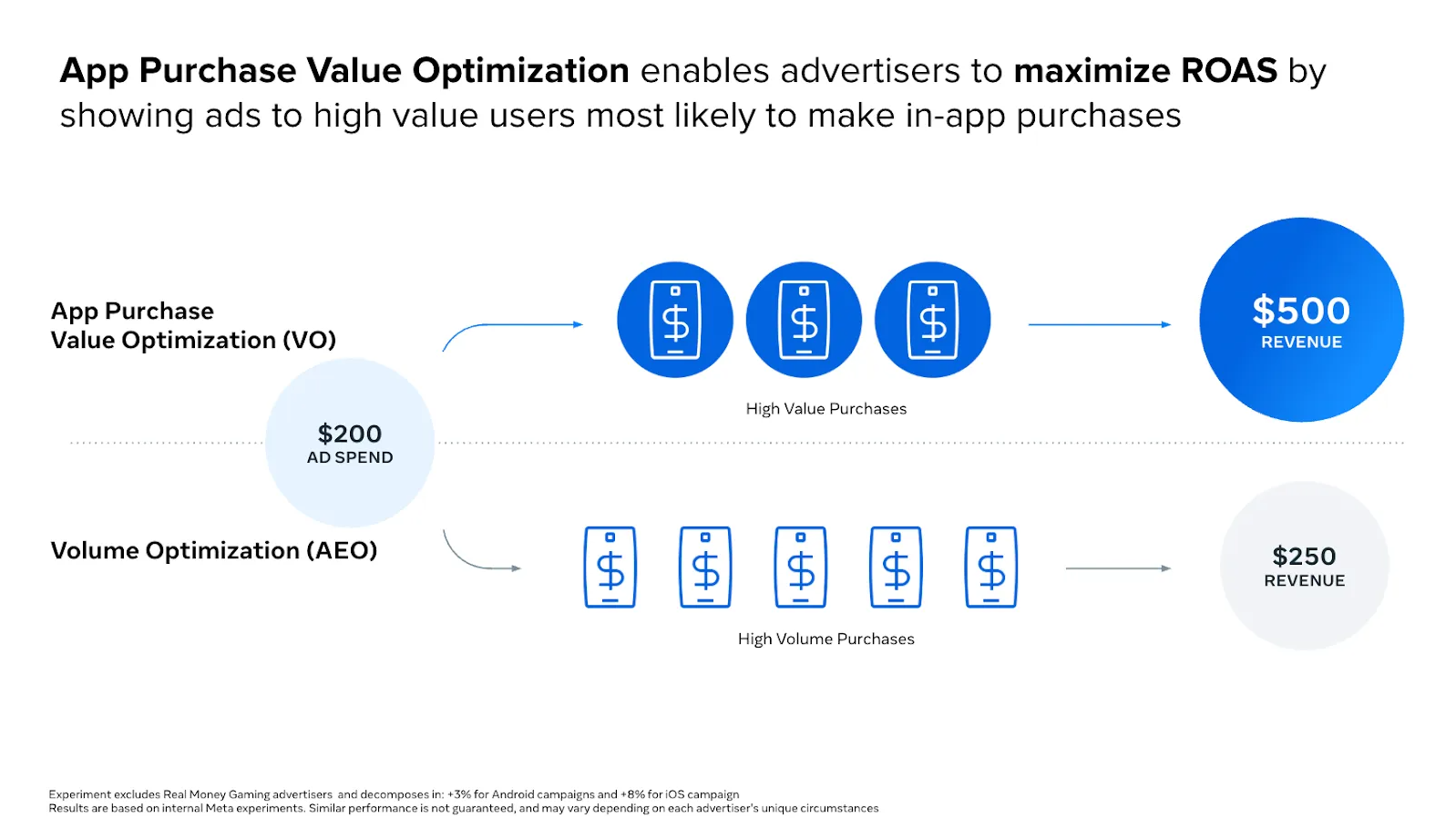
The media giant Meta has recently introduced a new advertising optimization programme to help quote advertisers to move from seeking to locating high consumer groups. Advertising owners now have the flexibility to opt for optimization between “more transactions” and “one higher transaction value” — for example, to prioritize 10 transactions of $9.99 instead of 15 transactions of $1.99.
Meta states that the value optimization function can now increase the return on advertising inputs by 29 per cent for advertisers by using AI technology to accurately target users in high-value applications. Workroom feedback from FunPlus, CrazyLabs and Banditos Studio have increased the efficiency of users and the stability of advertising activities as a result of the shift to value optimization. Meta is also working with mobile monitoring partners, such as AppsFlyer, Adjust and Singular, which are attributed to the better alignment of the input model with the advertiser ‘ s conversion measurement system. The company simultaneously updated the criteria for the definition of “new users” in its application outreach activities to better align with the recalculation cycle set out in the partnership brand MMPs.
Meta states in its bulletin: “Many users measure the effects of advertising by mobile monitoring partners MMPs, which can demonstrate the impact of advertising through various channels, including Meta. Meta Accreditation partners include Adjust, Airbridge, AppsFlyer, Branch, Kochava, Singular and Tenjin. We have been working to make the attribution of advertising and the delivery model more compatible with the reporting data seen by the advertisers on these third-party platforms.” “As part of our collaboration, we have joined MMPs in a series of basic model upgrades to optimize the enabling advertising system, thereby bringing more transformational behaviour to the advertisers in the third-party analysis tool.” For example, the advertiser may have a unique definition of a specific category or event in his MMP report — for example, how long after the user’s first installation application should be considered as “new users” if re-installed; or how long after the user is inactive, the conversion can be attributed to re-interactive advertising. By in-depth knowledge of these differential time frames, we can better target and reach the high-value groups identified by the advertisers.”
“On this basis, Meta has updated the time window used by the advertisers to define `new users’ on some MMP platforms. Advertisers using AppsFlyer can configure a flexible re-resultant window of 0 to 180 days, which will synchronize with the AppsFlyer platform. For Adjust and Singular platform clients with a life-new user window, Meta will allow 180 days of exclusion for their application outreach.” This has had a positive impact: following the extension of the exclusion window from 90 days to 180 days, the number of subscribers to mobile applications for new users has been reduced by an average of 20 per cent for those who do not meet the standards for new users.