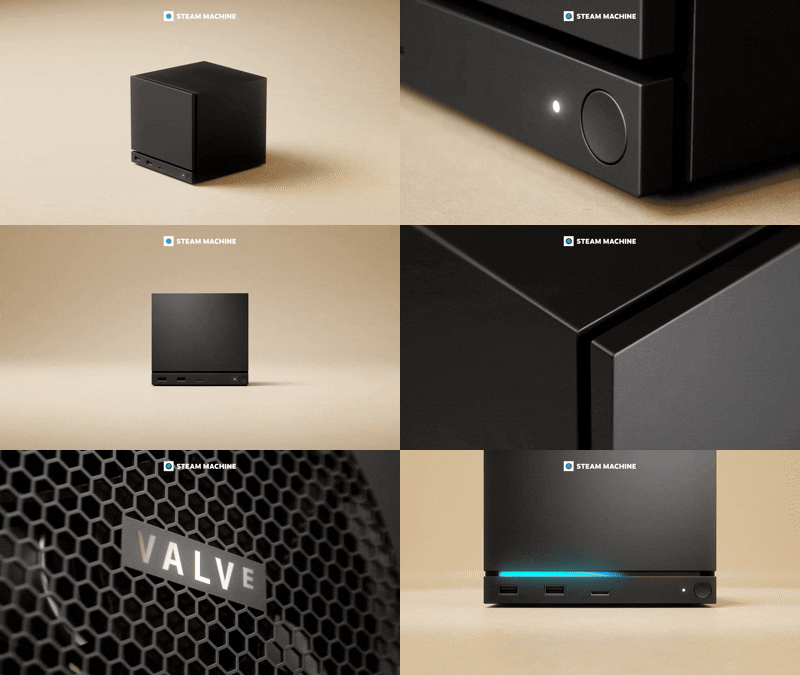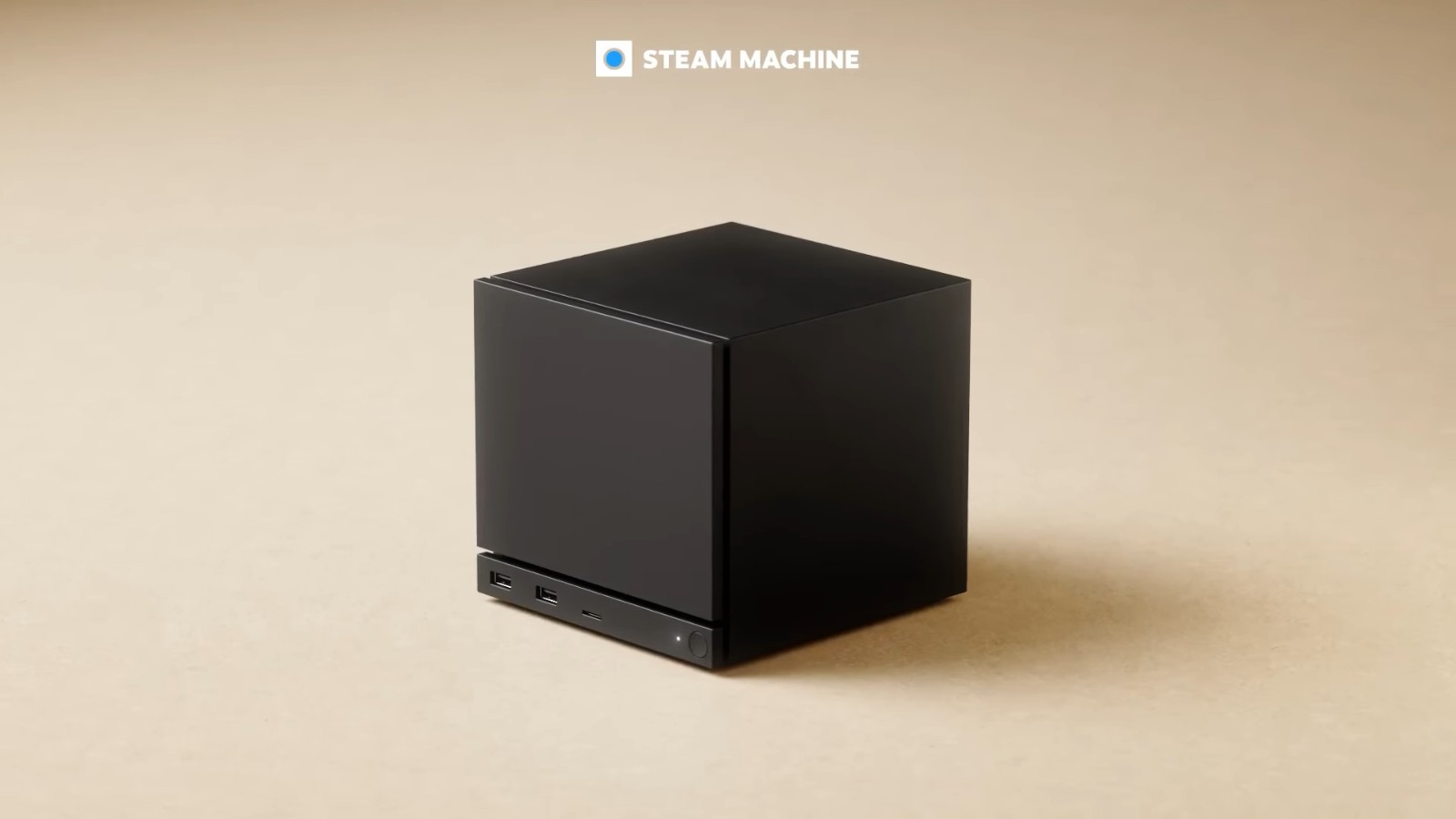
Valve published in mid-November, the new game hardware under development, Steam Machine, and following the former technology network Red Linus Tech’s disclosure that the machine would not be subject to a price set by the home game host, an engineer working in Steam recently confirmed the price strategy for this popular game: it will be close to the price range of PC.
Valve Engineer Pierre-Loup Griffais, who is responsible for a number of technical work on the Steam platform, spoke about the pricing of Steam Machine on the Podcast programme, noting that the company would generally refer to the “consolidation of peer performance PC” as a benchmark.
“If you use the spare parts for a PC that works the same way, we’ll target that range. Ideally, we would try to be more competitive and even offer more cost-effective options, but still in the process of adjustment, it is difficult to give final prices.”
Unlike the subsidy strategy of hard-core sales, which is common in traditional game hosts, and software to earn back, Valve does not intend to attract players by lowering hard-body prices.
Nevertheless, Griffais adds that the new section Steam Machine still has some characteristics beyond the reach of DIY players, and even self-assembly PCs are difficult to achieve, such as very small body design, operation with a television remote, access to a game controller and low noise.
“Sit on the sofa, press your hand and press the button, and you can start at once like a general living room device, an experience that is not present in the PC market at all, and it is difficult to measure with a normal pricing logic.”
In terms of price expectations, this semi-official explosion suggests that Steam Machine ‘ s sales prices may be higher than most players or industry forecast.
The P.P.C. Gamer team had estimated that Steam Machine fell on average at about $525 (new 16,500) and was cheaper than PS5 with CD-ROMs, predicting that it would cost less than $100 than Nintendo Switch 2, but that it was essentially a medium-size P.C., which was a selling point for miniaturization and integration of living rooms, and was now almost certain that it would not be so cheap.
“Now, with 750 to 800 dollars, you can form a whole machine with RTX 5060, and if Valve pulls the price higher, it could get Steam Machine back into a decade of silence.”
Steam Deck has a reputation for the high value of performance versus pocket, and Valve’s so-called “winning” may have some room for a new Steam Machine to get out of the shadows of the previous generation (2015) and successfully find a place in the living room entertainment market and wait for the real deal in 2026.